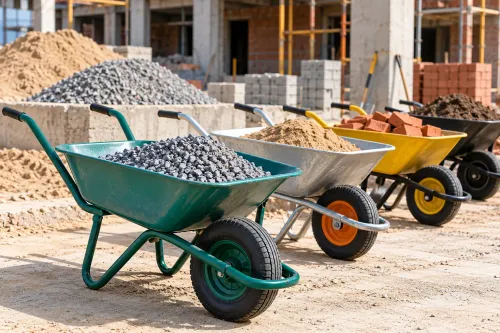
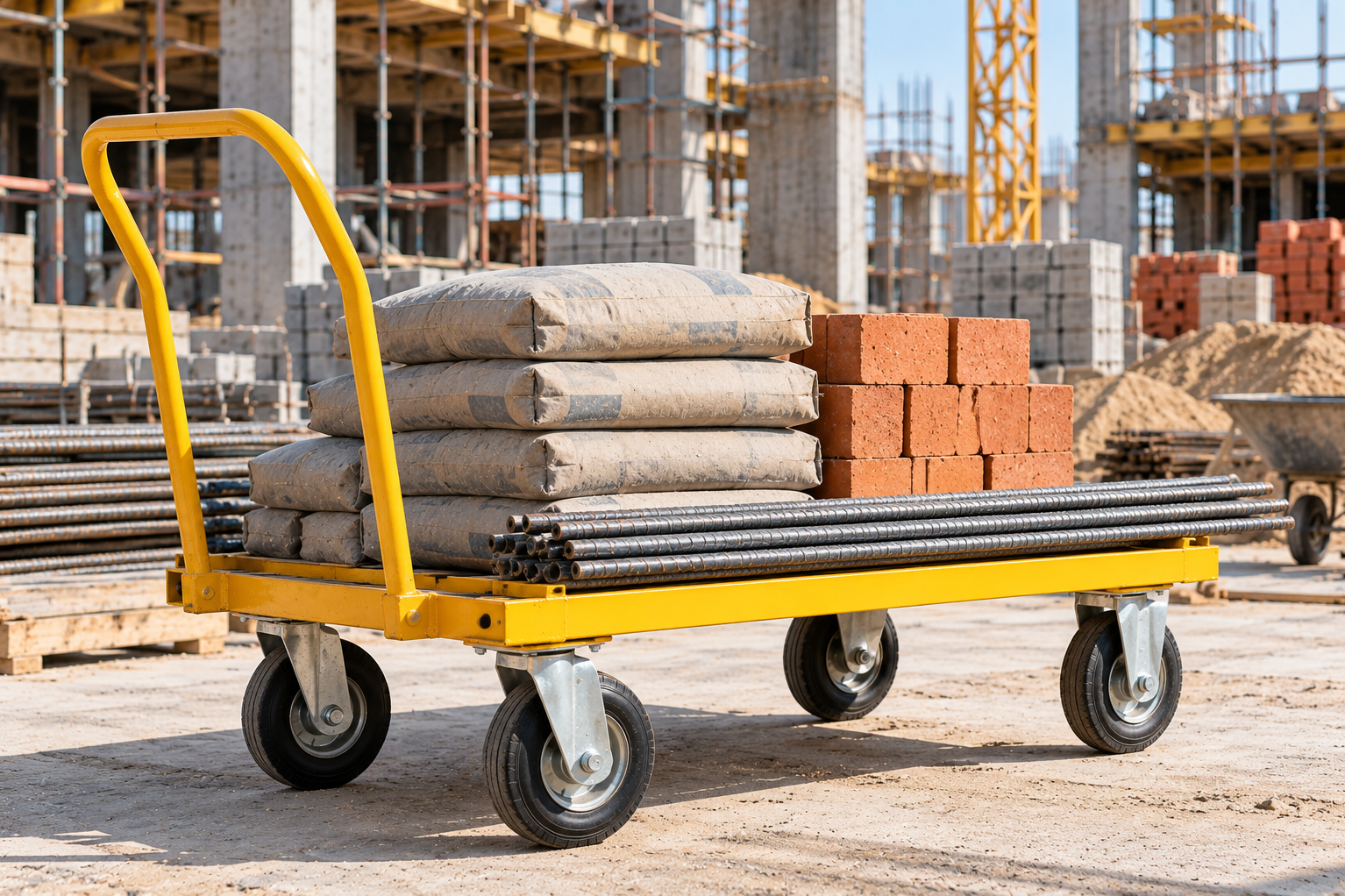
Material movement is one of the most frequent activities on almost every construction project. Workers may need to shift bricks, tiles, bags, tools, debris, fabricated parts, or other supplies repeatedly between storage points and active work areas. A suitable Trolley can make these short-distance movements more organized while reducing unnecessary manual carrying.
Because construction trolleys appear relatively simple, they are sometimes purchased without considering load type, wheel arrangement, platform dimensions, site terrain, or frequency of use. These factors can significantly influence practical performance.
Identify the Main Load
Different materials create different handling requirements.
A trolley used for boxed tiles does not necessarily need the same configuration as one moving bags, tools, fabricated items, or demolition debris.
Before procurement, list the materials the trolley will handle most frequently.
Consider their:
- Weight
- Dimensions
- Shape
- Stability
- Loading method
- Unloading method
This makes it easier to choose a practical platform or body configuration.
Check the Route
Material-handling equipment is only as useful as the route it must travel.
Project managers should examine floor condition, ramps, temporary pathways, door openings, turning areas, lift access, and other obstacles.
Wheel selection becomes particularly important on rough or uneven construction surfaces.
A trolley that rolls easily across a finished industrial floor may behave very differently on an unfinished site.
Do Not Ignore Maneuverability
Large capacity can appear attractive because it reduces the number of trips.
However, increasing trolley dimensions can make turning, positioning, or passing through restricted spaces more difficult.
The best size balances useful carrying capacity with practical control.
This is especially important for building projects where corridors, doorways, temporary partitions, or scaffolding can restrict movement.
Review Construction Quality
Regular construction use can place repeated stress on the trolley frame, platform, wheels, axles, handles, and joints.
Procurement teams should inspect fabrication quality and determine whether the unit is suitable for the expected load and frequency of use.
Where multiple trolleys are purchased for a major project, consistent specifications can simplify maintenance and equipment allocation.
Plan Trolleys Around Work Zones
Instead of allowing material trolleys to circulate randomly, larger sites can establish basic movement routes between unloading zones, storage areas, fabrication areas, and work fronts.
This can reduce congestion and make material delivery more predictable.
For example, a site might allocate particular trolleys to masonry materials while others handle tools or finishing supplies. This helps avoid delays caused by equipment constantly being unavailable where it is needed.
Consider Lifetime Value
The cheapest trolley is not necessarily the lowest-cost option over a complete project.
A contractor should consider expected service life, wheel wear, repair requirements, load capacity, operator handling, and frequency of use.
On a large project, a trolley may complete hundreds or thousands of material movements. Small differences in durability or handling can therefore become meaningful over time.
Builders, infrastructure companies, industrial contractors, and equipment rental businesses around Nagpur frequently need basic material-handling equipment alongside larger construction machinery. Ovi Enterprises supplies equipment for these varied construction requirements across Maharashtra.
A construction trolley delivers value through simplicity. When its load capacity, dimensions, wheels, frame, and handling characteristics match the working environment, it can support faster movement of everyday materials without adding complexity to site operations.
Keywords