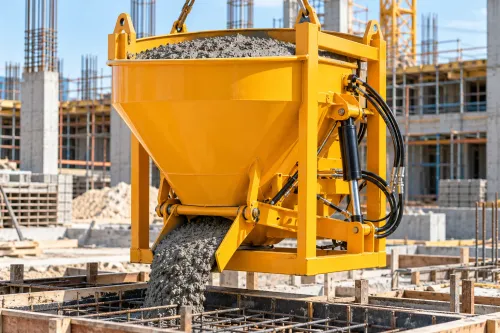
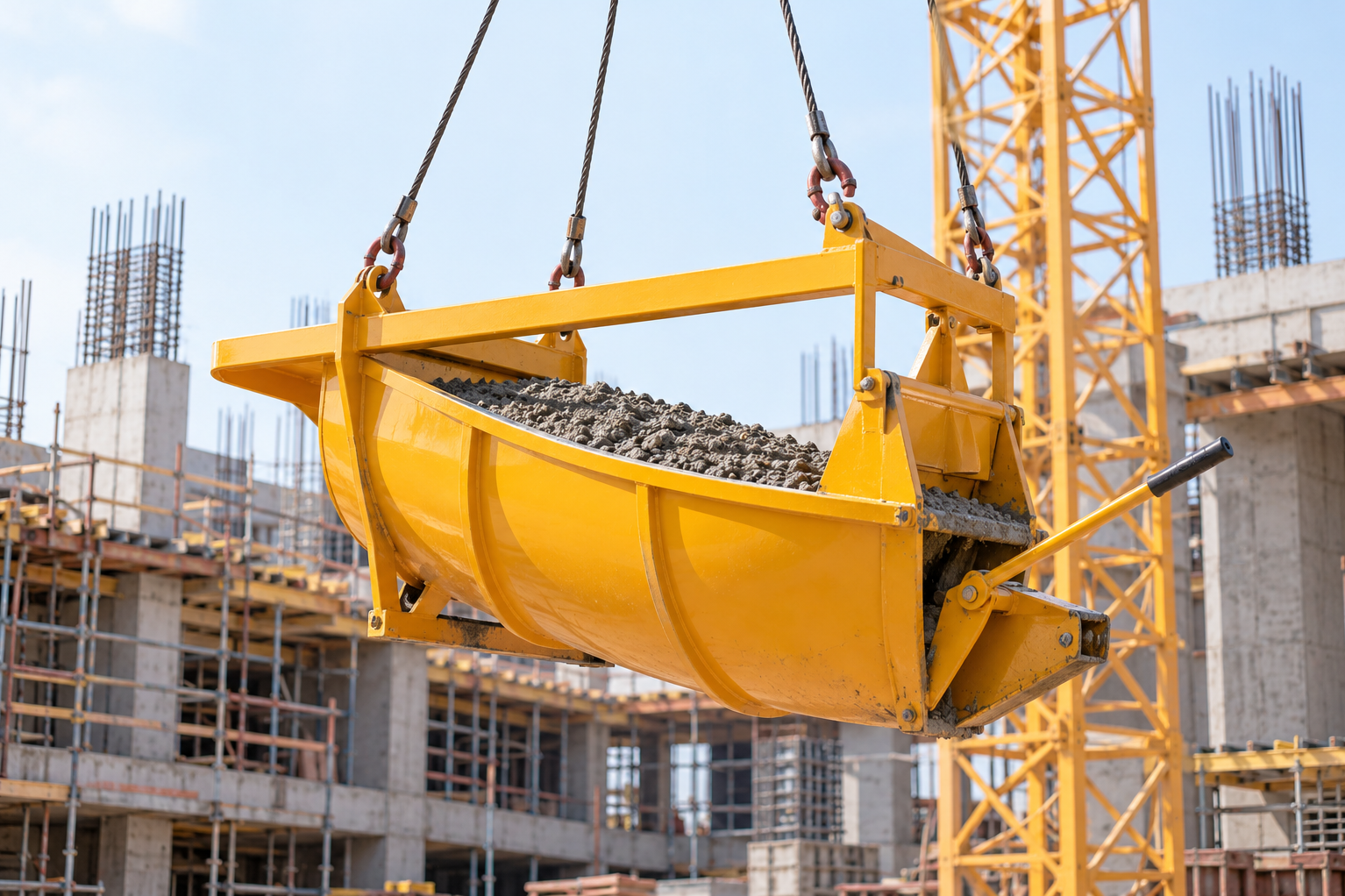
Concrete and construction material handling can become inefficient when site teams use equipment that does not match the required volume, lifting arrangement, or discharge process. A Banana Bucket For Construction Sites can support material handling during suitable lifting and concreting operations, particularly where controlled transfer between work areas is required.
Before procuring a bucket, contractors should assess capacity, construction quality, lifting compatibility, discharge arrangement, and the type of material being handled.
Start With Required Capacity
Capacity is often the first specification buyers compare, but bigger is not automatically better.
A larger bucket carries more material per cycle, yet it also creates a heavier loaded condition. The lifting equipment, supporting arrangements, site access, and operating method must all be compatible with the intended load.
Project teams should calculate realistic batch or transfer requirements before deciding on capacity.
Check Compatibility With Site Equipment
A construction bucket does not work independently.
Its use may depend on lifting machinery and other site arrangements. Procurement teams therefore need to examine the complete handling system rather than purchasing individual components in isolation.
Relevant questions include:
- What material will be carried?
- What is the loaded weight?
- What lifting equipment will be used?
- How will the bucket be connected?
- Where will loading occur?
- Where will discharge occur?
- What operating clearance is available?
Compatibility should be confirmed using equipment specifications.
Inspect Fabrication Quality
Construction buckets work in demanding conditions and may repeatedly carry dense, abrasive material.
Buyers should inspect general fabrication, structural components, joints, lifting points, discharge components, and overall workmanship.
Equipment used for lifting or suspended material handling should always be used according to manufacturer instructions and applicable site safety procedures.
Think About Discharge Control
Moving material is only half of the task. It must also be discharged where required.
The discharge arrangement should suit the intended operation and allow the site team to manage material placement effectively.
For concrete work, coordination between the lifting operator and receiving crew becomes especially important.
Avoid Common Procurement Mistakes
One common error is choosing capacity before checking lifting limitations.
Another is purchasing based on external dimensions without understanding how the bucket will be loaded, transported, lifted, positioned, or cleaned.
Project teams should also avoid assuming that a bucket suitable for one construction site will automatically suit another.
Consider the Full Working Cycle
Evaluate the complete process:
- Loading
- Lifting
- Movement
- Positioning
- Discharge
- Return
- Cleaning
Any delay at one stage affects the overall cycle time.
For major projects, small improvements in each cycle can become meaningful when the process repeats throughout the working day.
Infrastructure contractors, builders, and civil engineering companies in Nagpur often manage varied site layouts, making application-specific equipment selection important. Ovi Enterprises can assist buyers in discussing construction equipment specifications based on project requirements across the Maharashtra market.
A banana bucket should ultimately fit into the site's existing handling system without creating unnecessary operational complications. Capacity, fabrication, lifting compatibility, discharge requirements, and site safety procedures should all be evaluated before procurement. This produces a more reliable purchasing decision than selecting a bucket based solely on nominal volume.
Keywords