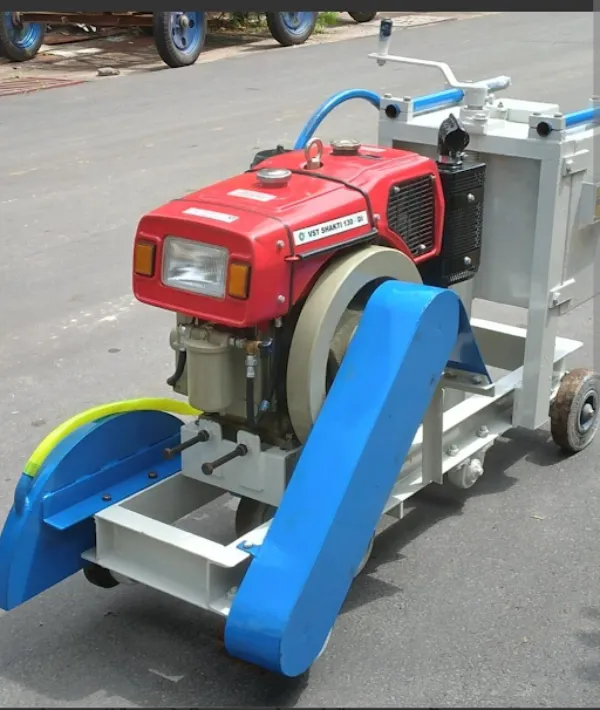
Cutting concrete or asphalt accurately is a routine requirement in road construction, repair work, utility installation, flooring, and infrastructure projects. A Road Cutter provides controlled cutting where contractors need defined lines rather than irregular breaking with impact tools.
Choosing a machine should begin with the material and required cutting conditions. Blade compatibility, cutting depth, power source, site mobility, workload, and maintenance support can all affect practical performance.
Start With the Material Being Cut
Not every cutting application is identical.
Road cutters may be used for applications involving:
- Concrete roads
- Asphalt surfaces
- Industrial floors
- Pavements
- Utility repair sections
- Expansion-joint preparation
- Damaged surface removal
- Controlled construction cuts
The blade must be appropriate for the material and machine specification. Using an unsuitable blade can reduce cutting efficiency and may increase wear.
Determine the Required Cutting Depth
Cutting depth is one of the first specifications buyers should establish.
A contractor making relatively shallow pavement cuts has different requirements from a civil team performing deeper concrete cutting. Buying equipment without defining this requirement can lead to either insufficient capability or unnecessary investment in a larger machine.
The required cutting depth should therefore be discussed before machine selection.
Consider Workload Rather Than One Job
A machine that appears suitable for a single project may not be the best choice for a contractor expecting regular cutting work.
Ask how frequently the machine will operate:
- Occasionally for repair work
- Several times each month
- Regularly across multiple sites
- Continuously during specific project phases
Higher utilization places greater importance on machine durability, consumable availability, maintenance planning, and service support.
Mobility Matters on Active Sites
Roadwork rarely occurs in perfectly open conditions.
Workers may need to reposition the cutter repeatedly as work progresses. Machine size, handling, wheel arrangement, controls, and overall maneuverability can therefore influence productivity.
For contractors undertaking urban work in Nagpur, site congestion may make practical handling especially important.
Examine Maintenance Requirements
Construction equipment operates in dusty, abrasive environments. Cutting machines are particularly exposed to debris generated during operation.
Buyers should understand routine inspection requirements before purchasing. Depending on the machine configuration, maintenance may involve checking:
- Blade condition
- Drive components
- Fasteners
- Controls
- Engine or motor components
- Wheels
- Water-feed arrangements where applicable
Operators should always follow the manufacturer's maintenance and safety instructions.
Look Beyond the Initial Price
Purchase price is easy to compare, but it is only one part of equipment cost.
A project manager should also consider consumables, expected utilization, downtime, maintenance, blade requirements, availability of parts, and the ability of the machine to handle future projects.
For equipment rental companies, these factors become even more important because the machine may serve different customer applications.
Construction firms evaluating machinery in Maharashtra can discuss these operating requirements with Ovi Enterprises. Providing details about the surface material, expected depth, frequency of use, and project environment helps narrow the available options.
A suitable road cutter should provide the capability required by the work without adding unnecessary complexity. Defining the application first makes equipment comparison considerably more meaningful than selecting a machine based solely on price or general specifications.
Keywords