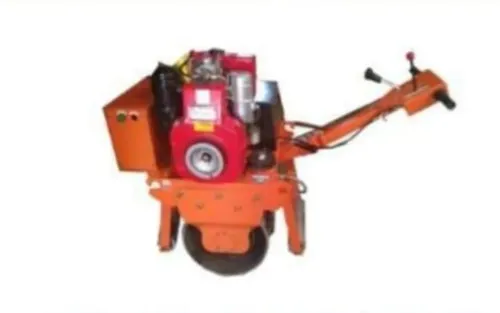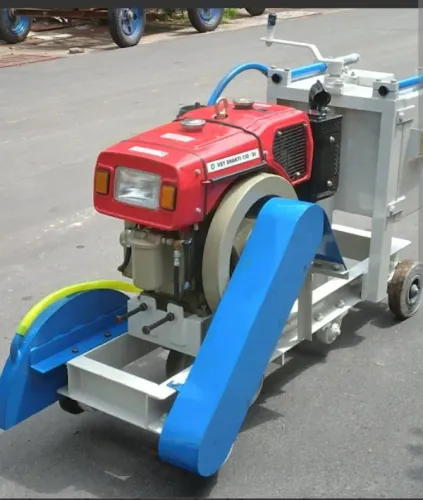
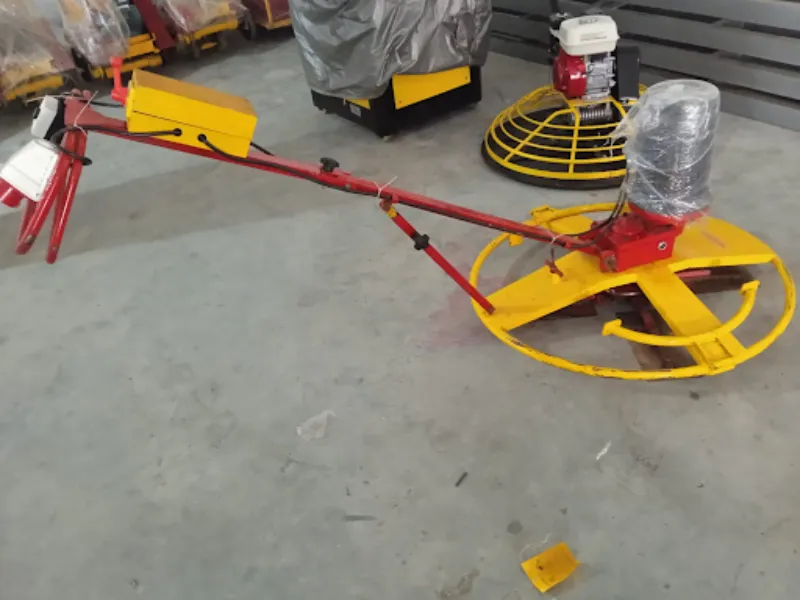
Achieving a consistent finish across a large concrete floor is difficult when the entire surface must be worked manually. Warehouses, industrial facilities, parking areas, commercial buildings, and other projects can involve substantial floor areas where productivity and finish consistency become important. A Power Floater mechanizes part of the finishing process after concrete has been placed and consolidated.
The machine can improve productivity, but successful finishing still depends on concrete condition, timing, operator technique, and the required floor specification.
What Does a Power Floater Do?
A power floater uses rotating finishing components to work the surface of concrete after it has reached the appropriate stage of setting.
Depending on the machine configuration and finishing process, it can help produce a more uniform surface across larger areas than would be practical using only manual tools.
Typical applications can include:
- Warehouse floors
- Factory floors
- Parking areas
- Commercial buildings
- Large residential slabs
- Industrial facilities
- Selected infrastructure surfaces
Timing Is Critical
One of the biggest mistakes is treating power floating as a process that can begin at any convenient time.
Concrete changes continuously after placement. Starting too early can disturb a surface that is still too wet. Waiting too long can make finishing more difficult.
Experienced site teams assess the condition of the slab before beginning machine finishing.
Weather also influences timing. Nagpur's hot conditions during parts of the year can affect how quickly exposed concrete surfaces change, making coordination between placement and finishing crews particularly important.
Why Contractors Consider Mechanized Finishing
The main advantage is not simply speed.
On large slabs, mechanized finishing can help teams work a broader area with greater consistency. It can also reduce the physical effort associated with completing extensive floor areas entirely by hand.
For contractors handling repeated industrial flooring projects, this productivity improvement can become significant.
Machine Size Should Match the Work Area
Larger does not automatically mean better.
Site teams should consider slab dimensions, columns, walls, edges, obstructions, access points, and the amount of open floor area.
A machine that works efficiently across a large warehouse floor may be inconvenient in a smaller area with multiple structural obstructions.
Equipment selection should therefore reflect actual project geometry.
Operator Skill Still Matters
A power floater does not automatically create a high-quality floor.
The operator needs to understand machine movement, finishing sequence, concrete readiness, overlapping passes, and site safety. Edges or difficult areas may also require separate finishing methods.
Good floor construction remains a combination of concrete quality, placement, levelling, consolidation, finishing, joint planning, and curing.
Evaluating the Investment
Contractors should estimate how frequently large slab work appears in their project pipeline.
For occasional work, access to equipment may be the main consideration. For companies regularly constructing warehouses, factories, commercial floors, or large parking surfaces, ownership can provide greater control over scheduling.
Ovi Enterprises works with construction equipment requirements in Nagpur and across Maharashtra, giving contractors a local source for discussing machine suitability before procurement.
A power floater delivers the greatest value when it is treated as part of a complete flooring process. Selecting an appropriate machine, preparing operators, monitoring concrete readiness, and maintaining the equipment properly can help project teams achieve more efficient finishing across substantial floor areas.
Keywords