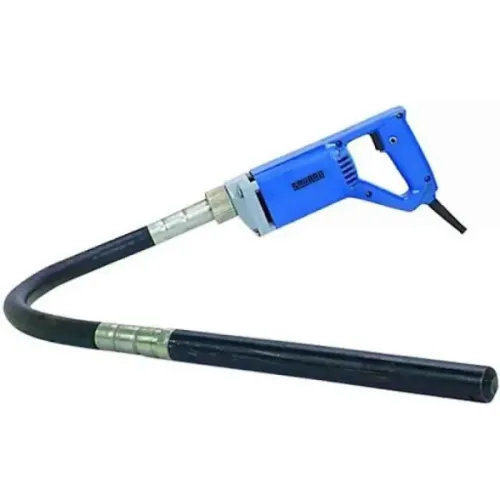
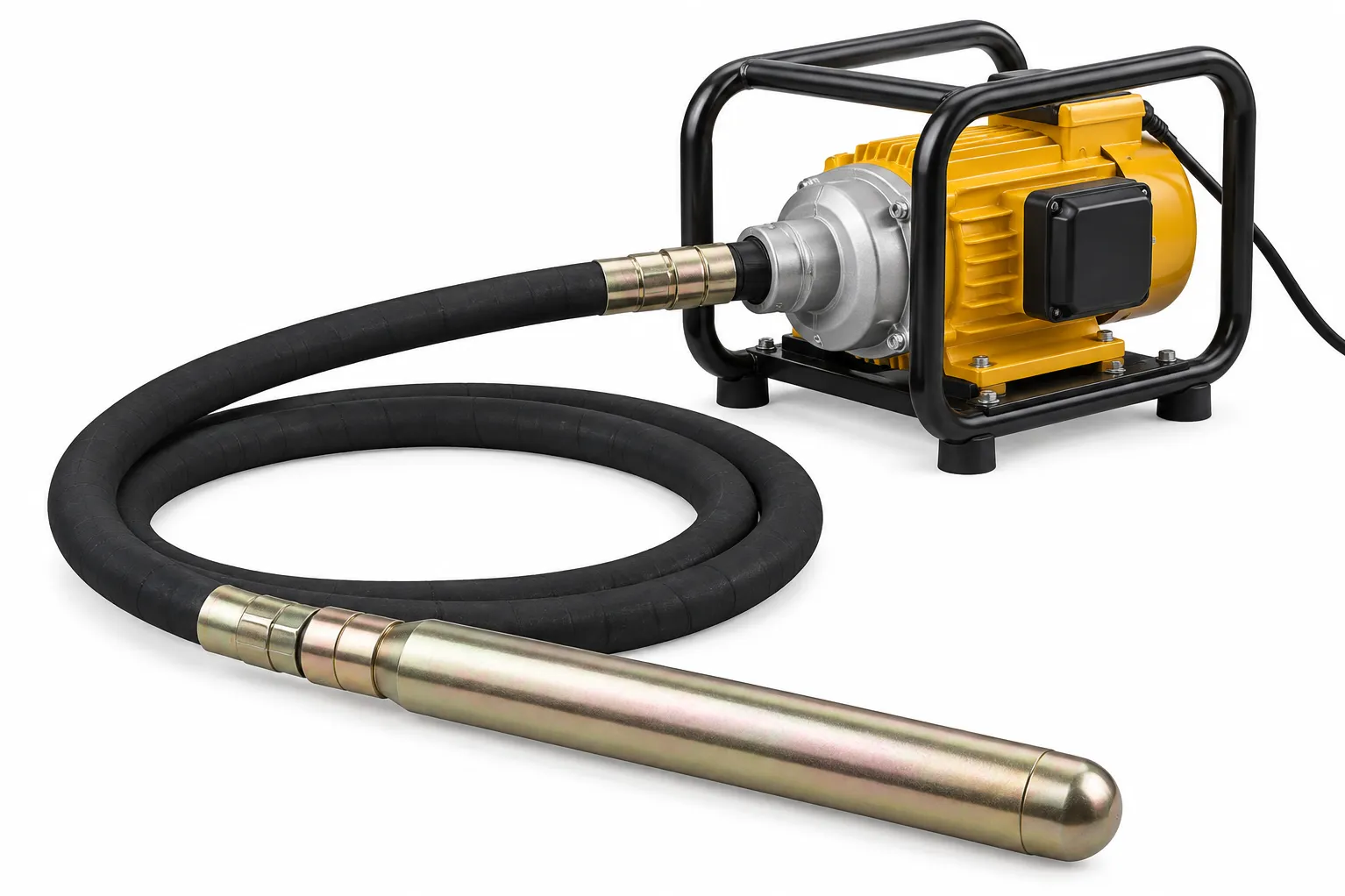
Concrete may appear dense when it leaves a mixer, yet freshly placed material can still trap air around reinforcement, corners, and formwork. A Concrete Needle Vibrator is commonly used to consolidate fresh concrete by transmitting vibration directly into the placed mix.
The effectiveness of the equipment depends heavily on how it is used. Correct technique can support uniform consolidation, while careless operation may result in under-vibrated areas or unnecessary over-vibration.
How Needle Vibration Works
A vibrating needle is inserted into freshly placed concrete. Its vibration temporarily increases movement within the mix, helping trapped air escape while allowing concrete to settle more effectively around reinforcement.
Needle vibrators are commonly associated with structural elements such as:
- Columns
- Beams
- Footings
- Walls
- Foundations
- Reinforced concrete sections
- Selected slab applications
The appropriate equipment specification depends on the size and geometry of the concrete member.
Insert the Needle Systematically
Random insertion can leave sections insufficiently consolidated.
Operators should work through the concrete in a planned pattern so adjacent areas receive appropriate vibration. The effective spacing depends on the equipment and concrete conditions.
The needle should generally be inserted carefully rather than dragged horizontally through the concrete as a method of moving the mix.
Concrete vibration is intended primarily for consolidation, not for transporting concrete across formwork.
Pay Attention Around Reinforcement
Congested reinforcement can make concrete placement difficult.
The vibrator needs to reach the necessary areas without damaging reinforcement arrangements or formwork. Equipment dimensions therefore matter, particularly for heavily reinforced structural sections.
Selecting an unsuitable needle size can make effective consolidation difficult in narrow spaces.
Recognize Under-Vibration
Insufficient consolidation can contribute to:
- Honeycombing
- Visible voids
- Poor surface finish
- Incomplete filling around reinforcement
- Trapped air pockets
If these problems repeatedly occur, project managers should review placement methods, concrete workability, vibrator selection, insertion technique, and operator practices.
Excessive Vibration Is Not the Solution
Keeping a vibrator in one position for an unnecessarily long period can be counterproductive.
Depending on the concrete mix, excessive vibration can contribute to segregation. Operators should therefore recognize visual signs that consolidation has occurred and move systematically through the pour.
Training is particularly important when different workers share equipment across multiple site activities.
Equipment Condition Matters
A vibrator cannot perform properly when components are damaged or poorly maintained.
Before concreting begins, site teams should check relevant electrical or mechanical components, connections, hoses or shafts where applicable, and the condition of the vibrating needle.
Discovering equipment problems midway through a major concrete pour can create avoidable disruption.
Nagpur contractors often work under demanding temperature, scheduling, and site-access conditions, making pre-pour equipment checks particularly valuable. Construction equipment suppliers such as Ovi Enterprises can help buyers identify suitable vibrator configurations based on expected site use.
Concrete quality depends on many factors, including batching, placement, reinforcement detailing, vibration, finishing, and curing. A concrete needle vibrator performs one specific but important role within that process. Using it systematically helps project teams achieve more consistent consolidation instead of relying on vibration simply as a routine step.
Keywords